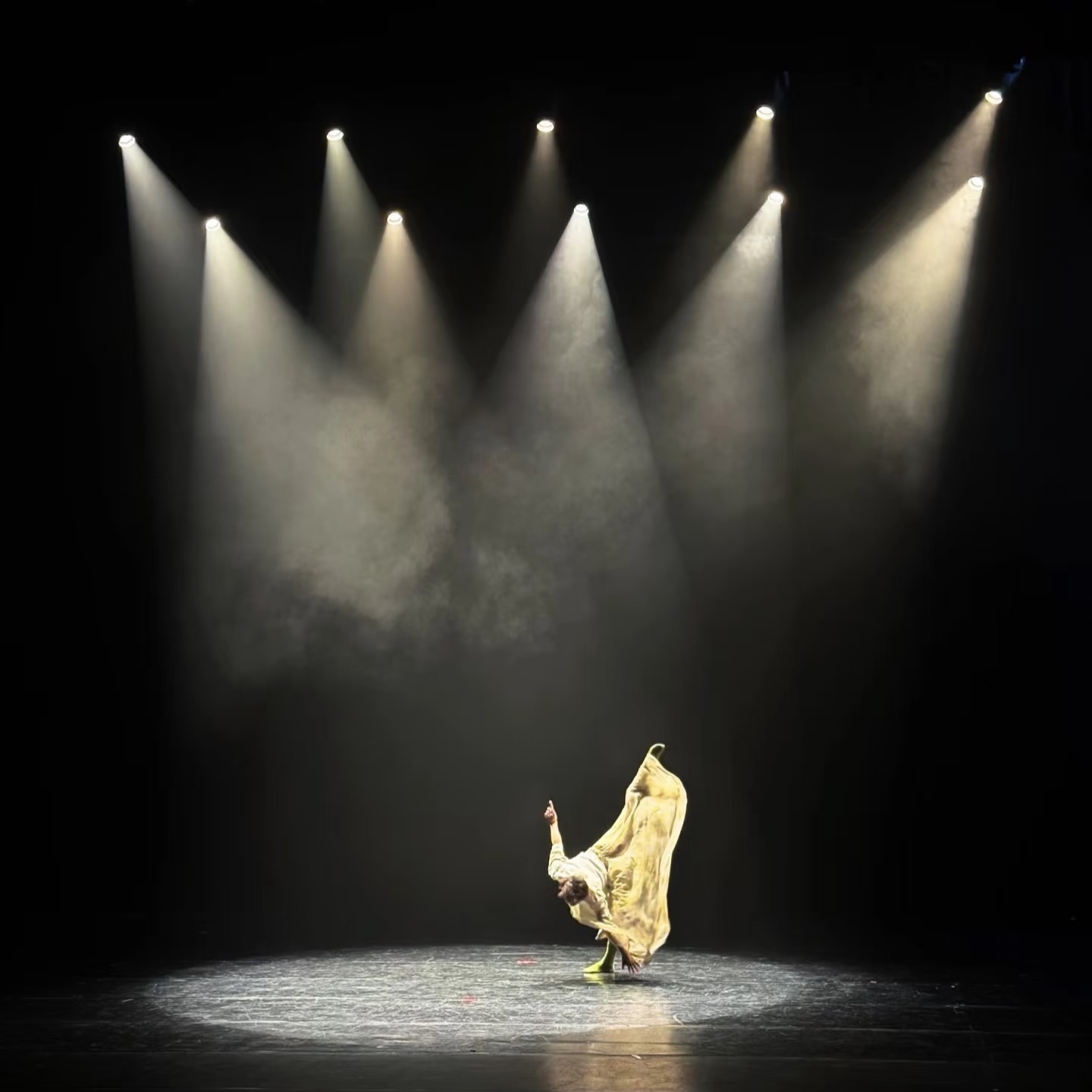


A church can have plenty of light and still look flat on camera. The problem often shows up when a speaker steps away from the brightest part of the stage, or when the background looks good but faces lose detail.
Then the same room may need a completely different look during worship music, announcements or a special service. That's why house of worship stage lighting is less about adding more fixtures and more about making one system work across very different moments.
DMON Lighting is a stage lighting manufacturer producing moving head and stage lighting fixtures for professional installation and rental applications.
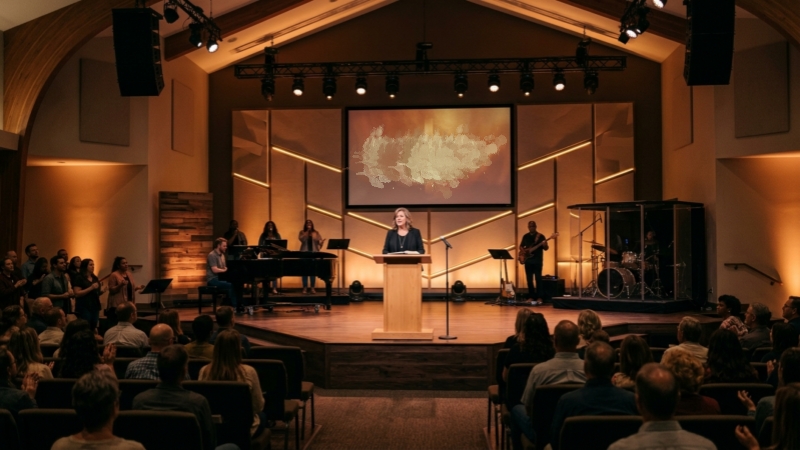
One Room, Several Very Different Lighting Jobs
A sermon usually needs clean, predictable light on faces. Ten minutes later, the worship band may need deeper color and more movement. Livestreaming adds another layer, because a look that feels fine in the room can still expose poorly on camera. Announcements need neutral white. A holiday service might call for something more dramatic entirely.
The rig has to move between these jobs without asking the operator to rebuild the show every time.
Why Wash Coverage Matters More Than Fixture Count
LED wash moving heads are useful when the stage needs even coverage across speakers, musicians and background areas without adding too many fixed positions.
When evaluating wash fixtures for worship spaces, low-level dimming is worth checking carefully. A fixture can look fine at full output and still step, flicker or lose color consistency when dimmed low — exactly where quiet service moments often operate.
RGBW or broader color-mixing systems can give the operator more control over white balance and subtle color adjustments than basic RGB fixtures. Actual skin-tone quality still depends on LED quality, optics, color rendering and camera settings.
Where Beam and Spot Fixtures Actually Help
Beam moving heads can work well during contemporary worship music, when visible aerial movement is part of the production style. During spoken-word sections, beam effects usually play a smaller role, so programming and fixture positioning matter more than simply adding more beam units.
In a mixed rig, beam fixtures handle movement and aerial effects, while spot or profile fixtures give the operator more control over specific stage areas.Spot or profile moving heads can be useful where the stage needs controlled highlighting, gobos, tighter beam edges or more precise positioning than a wash fixture can provide. A spot or profile fixture can help keep a speaker, choir section or backdrop element visually separated from the rest of the stage.
Make the Control System Match the Operator
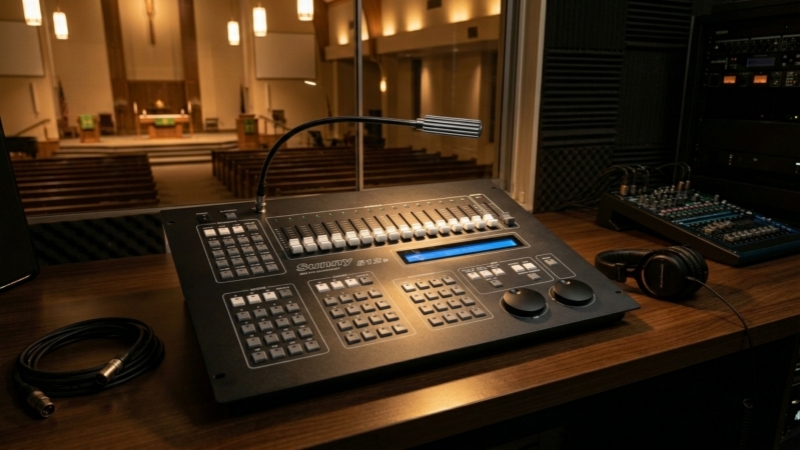
A console can be technically powerful and still be the wrong choice for the person running it. In many worship spaces, lighting is operated by volunteers or staff who only use a small part of the system each week.
Pre-programmed scenes for sermon, worship, announcements and special services can reduce the number of decisions the operator has to make during the service.
Details That Matter More in Worship Spaces
Noise. Fan noise is easier to notice in spoken-word and acoustic environments than in concerts. If fixtures are mounted close to the audience or stage microphones, low-noise operation is worth checking before installation.
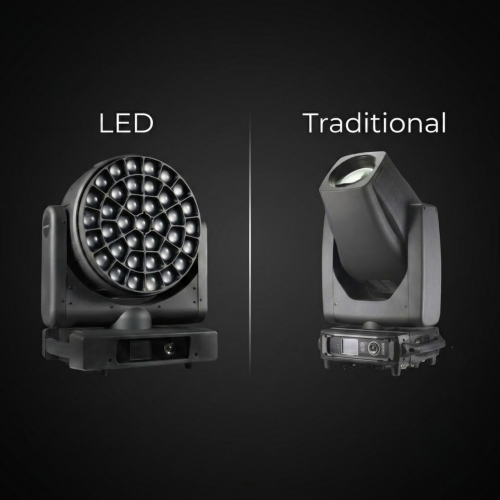
Warm-up. Discharge fixtures need warm-up and restrike time, while LED fixtures are available immediately. That difference matters in venues where systems are powered up shortly before a service or used unpredictably during the week.
Maintenance access. A fixture mounted high above a sanctuary may be easy to forget about until something fails. Access for cleaning, servicing and replacement should be considered when positions are planned, not after installation.
Lighting for Livestreaming and Cameras
A stage can look balanced to the eye and still look uneven on camera. On camera, problems such as dark eye sockets, bright foreheads, clipped backgrounds and inconsistent white balance become much easier to notice.
For venues that record or stream services, check the lighting from the camera position, not only from the front row. Exposure, white balance, flicker performance and consistency between fixtures matter as much as overall brightness.
How to Plan a House of Worship Lighting System
Speaker and stage coverage. How much of the stage must stay evenly lit?
Worship music. Is movement or aerial effect part of the visual style?
Livestream and cameras. Are multiple camera angles used? Are faces exposed consistently?
Control. Who operates the system, and how often?
Installation. Are fixtures easy to access, maintain and replace?
Fixture count should come after these questions, not before them.
If you're planning a house of worship lighting project, contact our team with the stage dimensions, mounting height, camera setup and the types of services the room needs to support.
Frequently Asked Questions
What stage lighting is commonly used in a house of worship?
Many worship spaces use wash fixtures for general stage coverage, with spot/profile or beam fixtures added where more control or movement is needed. The final mix depends on the service style, stage layout and whether the venue records or livestreams.
How many lights does a church stage need?
There is no useful fixture count based only on seating capacity. Stage width, trim height, camera positions, throw distance, required coverage and fixture output all affect the number.
What lighting works best for church livestreaming?
Start with even face lighting, stable white balance and fixtures that behave well on camera at low dimmer levels. Flicker performance, color consistency and camera exposure usually matter more than dramatic effects.
Can volunteers operate a professional lighting system?
Yes, if the system is programmed around repeatable scenes rather than constant live adjustment. The more predictable the weekly service is, the more useful scene presets become.
Do moving head lights make noise in a church?
Some do. Fan noise becomes more noticeable during sermons, prayer and acoustic music, so fixture placement and low-noise modes should be checked before installation.
Should a church use LED or discharge moving heads?
Both can work depending on the application. LED fixtures offer instant start, lower maintenance and flexible dimming, while discharge fixtures may still be suitable where high-intensity beam effects are the priority. What matters is what that fixture actually needs to do in the room.
DMON Lighting manufactures professional stage lighting equipment in Guangzhou, China, serving distributors, rental companies and project contractors in international markets.