
When buyers compare moving head lights, the split usually comes down to three types: beam, spot and wash. Beam moving heads create narrow, high-intensity aerial beams. Spot moving heads produce more controlled projections with gobos and defined edges, while wash moving heads provide wide, even color coverage. The right choice depends on whether the application needs aerial impact, projection and pattern effects, or broad stage coverage.
For rental companies, theaters, concerts, clubs and event venues, the choice is rarely about which type is "better." Beam, spot and wash fixtures are designed for different jobs, and most professional lighting systems use a combination of all three. DMON Lighting is a stage lighting manufacturer producing beam, spot, wash and hybrid moving head fixtures for international projects and rental applications.
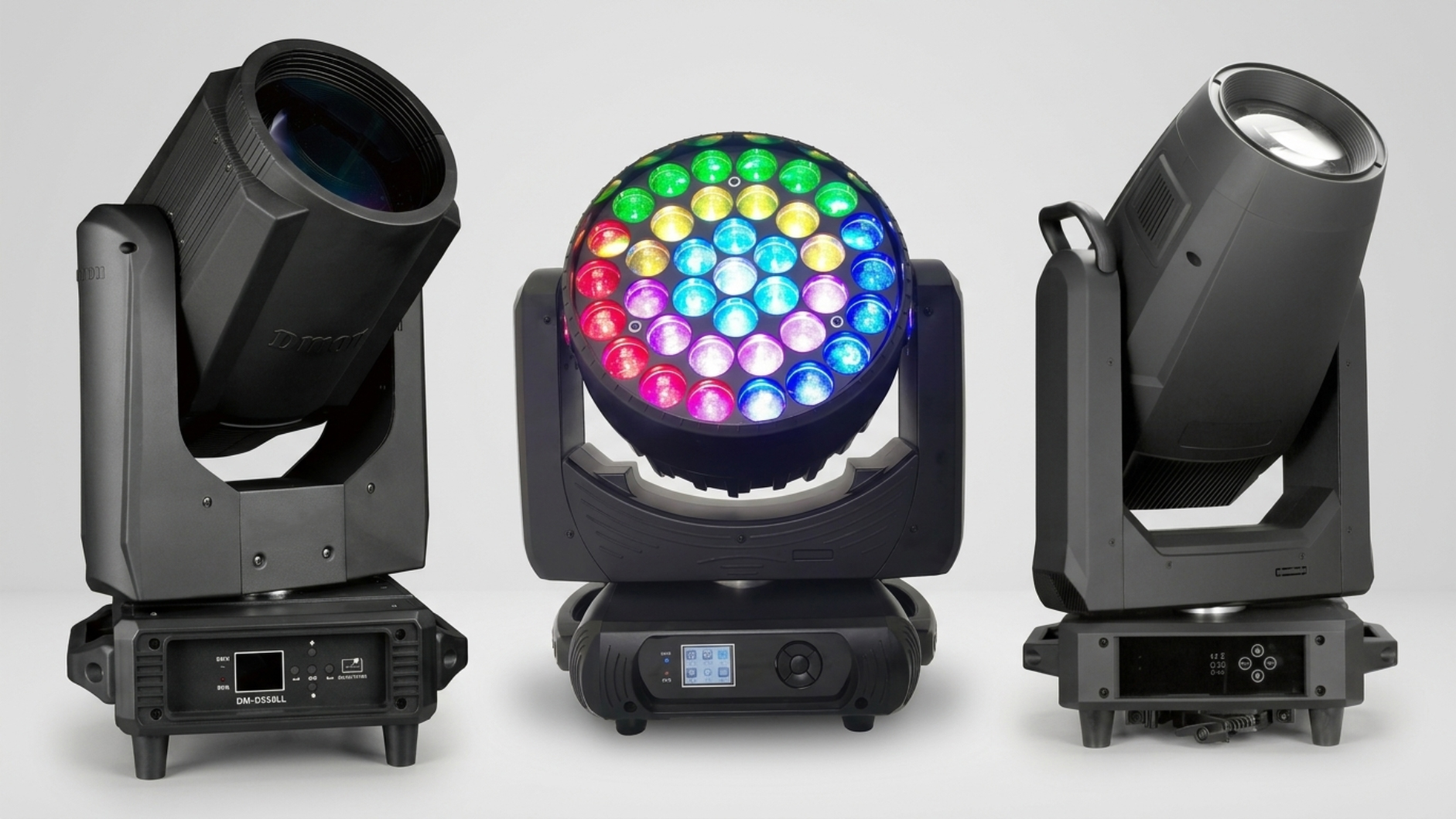
Beam vs Spot vs Wash Moving Head Lights at a Glance
| Type | Light Output | Typical Beam | Main Purpose | Common Applications |
|---|---|---|---|---|
| Beam | Narrow and intense | Very narrow | Aerial effects and visual impact | Concerts, clubs, touring shows |
| Spot | Defined and controllable | Narrow to medium | Gobos, projection and highlighting | Theater, stages, events |
| Wash | Wide and soft | Medium to wide | Even color coverage | Stages, venues, weddings, theaters |
Beam Moving Head vs Spot Moving Head: What Is the Main Difference?
This is the comparison buyers ask about most, and it comes down to beam angle and purpose rather than power output. A beam moving head produces a tight, coherent column of light designed to be seen in the air — through haze, across a large room, as part of an aerial pattern. It is primarily designed for visible aerial effects rather than broad, even stage illumination.
A spot moving head produces a wider, more defined pool of light built to land on something — a performer, a set piece, a specific area of stage. Many professional spot moving heads include gobos, focus and adjustable zoom, allowing the fixture to project patterns or highlight specific stage areas. That flexibility is also what makes spot fixtures harder to shop for, since gobo quality and zoom range rarely show up clearly on a spec sheet.
Neither type is the stronger choice in general — a higher-wattage spot won't replace a beam's aerial output, and a beam won't give you a usable gobo projection. The right pick depends on whether the fixture needs to be seen or needs to illuminate.
Beam vs Wash Moving Head Lights
Beam and wash fixtures sit at opposite ends of the same rig. Beam moving heads concentrate their output into a narrow column for aerial impact — they're built to be visually striking, not to light people or surfaces evenly. Wash moving heads do the opposite: they spread light across a wide area to color the stage, fill in shadows, and put usable light on performers.
Most concert and touring rigs run both, and it's a division of labor rather than a substitution. Beams handle the aerial visual language of a show; wash fixtures handle the coverage that makes the stage readable underneath it.
Spot vs Wash Moving Head Lights
Spot and wash fixtures both put light on the stage rather than into the air, but they solve different problems. A spot fixture is about control — a defined edge, a gobo pattern, a precise area or a moving performer being tracked. A wash fixture is about coverage — a broad, even field of color across a backdrop, a set, or a full stage.
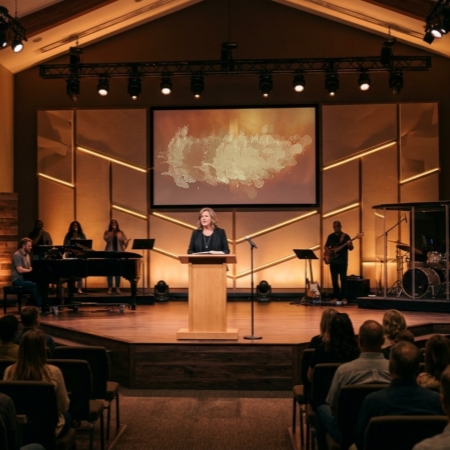
In theater and house-of-worship setups especially, the two typically run side by side: wash fixtures set the base color and mood, spot fixtures pick out specific moments, cues, or performers within it.
What Is a Beam Moving Head Light?
A beam moving head light uses a small lens and a high-intensity source to keep its beam angle narrow over long throw distances, which is what makes it read clearly from the back of a large venue. It's the fixture behind aerial shapes, synchronized beam patterns across a dark stage, and prism-split effects that fan a single beam into multiple points.
Beam fixtures work best for aerial effects, high-energy concerts, and large or touring stages where the audience is far from the rig. Beam fixtures are generally not the first choice for broad performer illumination because their narrow beam angle provides limited stage coverage.
What Is a Spot Moving Head Light?
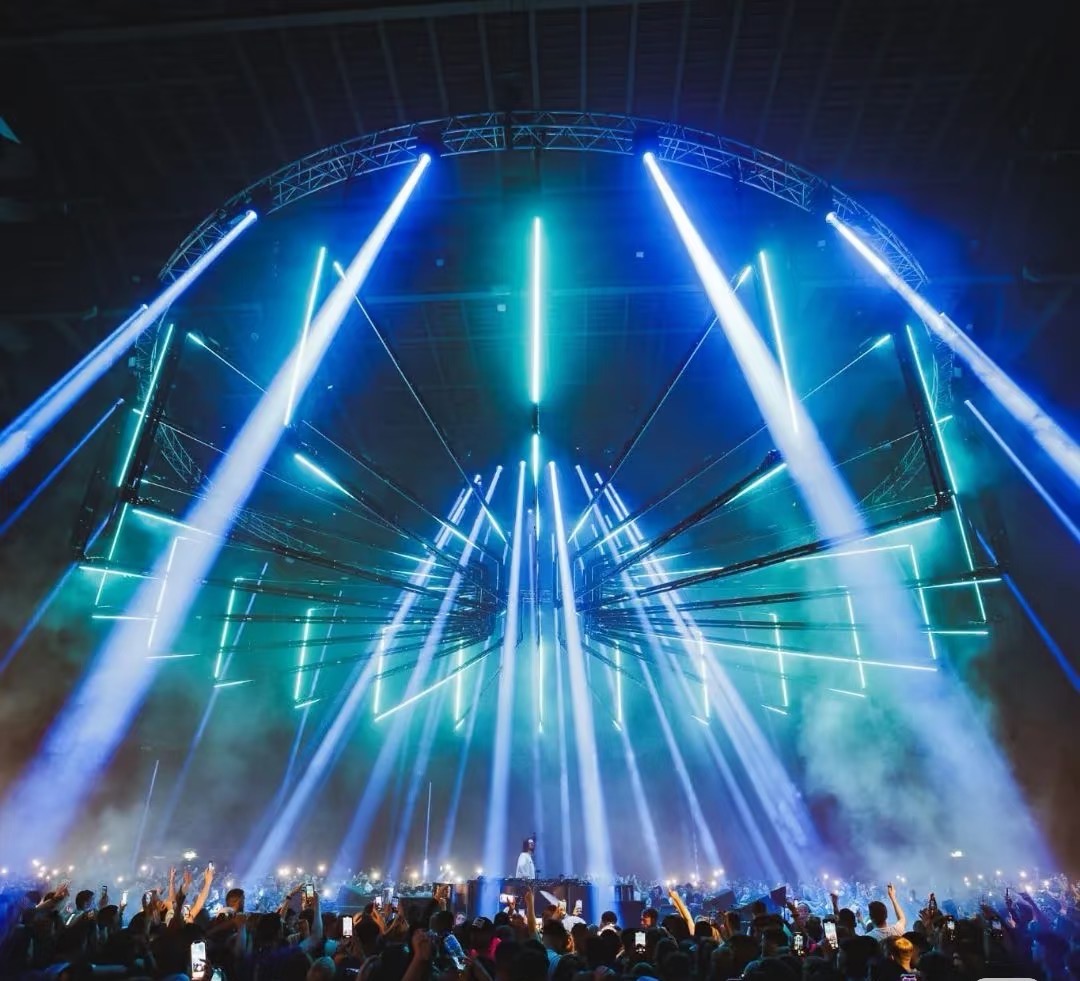
A spot moving head light sits between beam and wash in output, but is defined by what it adds: gobos, a defined beam edge, and a zoom range to adjust the projection size on the fly. That combination is what lets one fixture pick out a performer, project a pattern, or highlight a section of set.
Spot fixtures offer more projection and positioning control than beam or wash fixtures, especially when gobos, focus and zoom are required, which is also what makes them harder to buy well. The output looks similar across brands on paper; the differences show up in gobo sharpness, zoom range, and shutter precision, none of which are easy to judge from a spec sheet alone. Use spot fixtures for theater, broadcast, follow-spot work, and mid-size events where one fixture needs to cover multiple jobs.
What Is a Wash Moving Head Light?
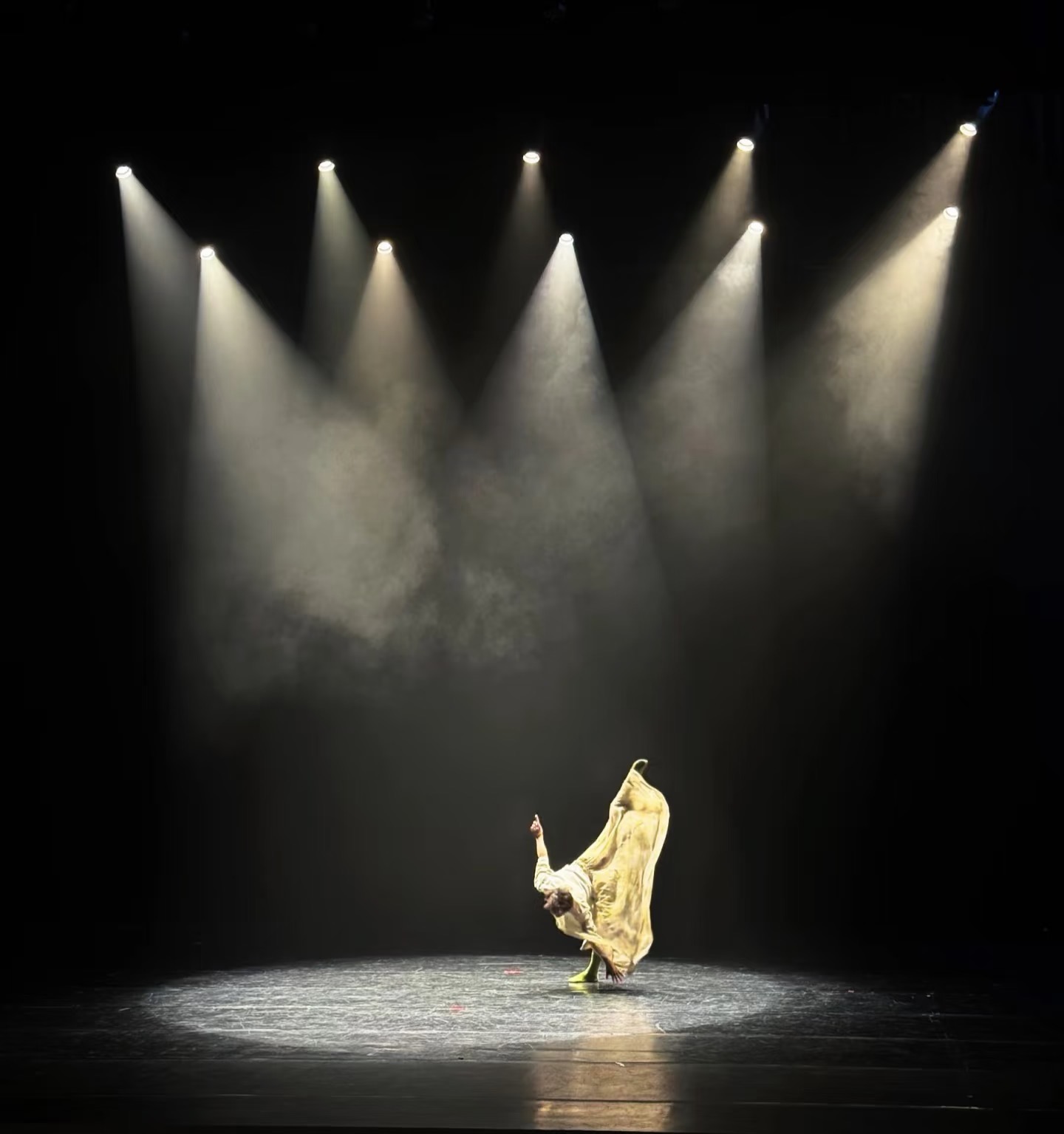
Wash moving head lights spread light evenly across a wide area. They color a stage, fill in shadows, and create a consistent toned environment. Most of the light that actually lands on performers in a show comes from wash fixtures, not beams.
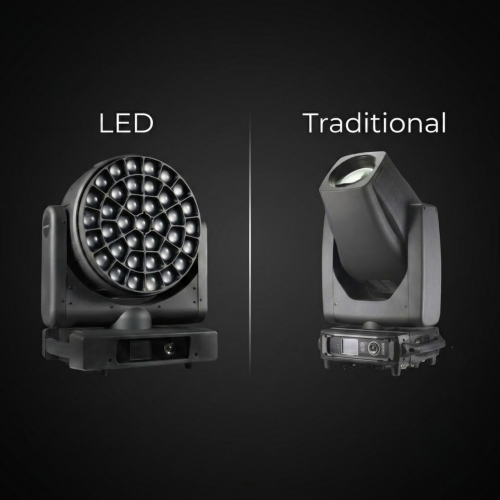
LED wash moving heads are widely used for applications that need smooth RGBW color mixing, lower power consumption and long LED service life. Wash fixtures are the right tool for corporate events, theater, houses of worship, and any application where even, flattering light on people and backgrounds is the priority.
Which Moving Head Light Should You Choose?
Choose a beam moving head if:
- aerial effects are a core part of the show
- long-distance visual impact is required
- the fixture will be used for concerts, clubs, or touring
Choose a spot moving head if:
- gobos and projection effects are important
- precise positioning or tracking is required
- performers or specific stage areas need to be highlighted
Choose a wash moving head if:
- even color coverage is the priority
- performers, backgrounds, or large stage areas need lighting
- smooth color mixing matters more than aerial beam effects
For many professional systems, the best result comes from combining beam, spot and wash fixtures rather than relying on only one type.
How Many Moving Head Lights Do You Need?
There is no fixed fixture count based only on audience capacity. A 500-person theater and a 500-person club can require very different lighting systems. Stage dimensions, trim height, throw distance, fixture output, desired effects and available rigging points all affect the final quantity.
For rental companies and contractors, it is usually more practical to plan the rig by function first: how many fixtures are needed for aerial effects, how much wash coverage is required, and where spot or profile fixtures are needed for projection and highlighting.
One More Thing
Fixture type is only part of the decision. When comparing fixtures within the same category, wattage alone does not determine performance. Light source quality, optical design, beam angle, thermal management and consistency between fixtures can all affect the actual output and long-term reliability — and the difference tends to show up over time, not on delivery day.
Frequently Asked Questions
What is the difference between a beam and a spot moving head light?
A beam moving head light produces a tight, narrow column for aerial effects and long-distance visibility. A spot moving head light produces a wider, defined pool of light with gobos and zoom for precise stage illumination. Beam fixtures are built for impact; spot fixtures are built for control.
Can a wash moving head light replace a beam moving head light?
No. A wash moving head light spreads light evenly across a large area to illuminate performers and color a stage. A beam moving head light creates a concentrated column for aerial effects. They serve different purposes and aren't interchangeable.
How many moving head lights do I need for a stage?
There is no universal number. Fixture quantity depends on stage size, throw distance, mounting height, required effects, fixture output and available rigging positions. A practical way to plan is to separate the rig into aerial effects, stage wash, and projection or highlighting requirements.
What is a gobo in a spot moving head light?
A gobo is a metal or glass disc with a cut or etched pattern. Placed in the light path of a spot moving head light, it projects that pattern onto a surface — stars, geometric shapes, foliage, logos. Gobos are one of the main features that distinguish spot fixtures from beam and wash units.
Are hybrid moving head lights worth buying?
Hybrid moving heads are useful when flexibility and fixture count matter. Dedicated beam, spot or wash fixtures may offer stronger performance in their specialized function, while hybrids make it easier to cover multiple effects with fewer fixtures. The better choice depends on the application and rental inventory strategy.
What is the difference between beam, spot and wash moving head lights?
Beam moving head lights produce a narrow column of light for aerial effects. Spot moving head lights project a defined, controllable beam with gobos for highlighting and patterns. Wash moving head lights spread wide, even color coverage across a stage. Each serves a different role, and most professional rigs use all three together.
If you're planning a rental inventory or stage lighting project and are unsure how to balance beam, spot and wash fixtures, contact our team with your venue size, throw distance and application.
Beam handles aerial impact, spot handles projection and control, and wash handles coverage and color. Fixture selection ultimately comes down to venue size, throw distance, the effects required, and the role each fixture plays in the overall system — not which single type looks best on a spec sheet.
DMON Lighting manufactures professional stage lighting equipment in Guangzhou, China, serving distributors, rental companies and project contractors in international markets.